12 Account-Based Marketing Examples That Actually Move Pipeline
By Robin Singhvi · Founder, SmartCue · Updated April 29, 2026
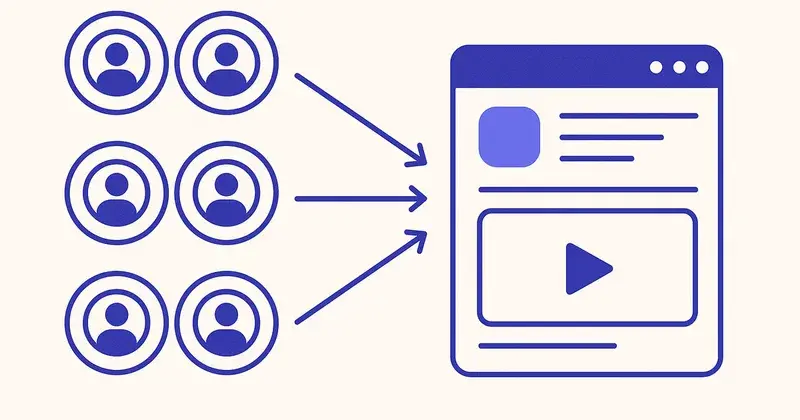
Most account-based marketing examples you'll find online are theater. Personalized branded gift boxes. Hand-written notes from the CEO. Custom landing pages with the prospect's logo above the fold that nobody on the buying committee ever visits. A 4x6 direct-mail postcard with a QR code. The stuff makes for great LinkedIn carousels and terrible pipeline reports.
I've watched ABM programs run across the 4,000+ teams using SmartCue. The ones that actually shift named-account revenue in 2026 don't lean on theater. They lean on three unsexy mechanics: account-specific interactive demos, personalized landing pages with embedded demos, and pre-call demo videos sent before the meeting starts. That's the defended thesis of this post — the ABM tactics that produce pipeline are the ones that show the buyer what the product does for their specific account, not the ones that decorate the outreach with their logo.
This post is 12 examples organized that way. Four account-specific demo plays. Four personalized landing-page plays. Four outreach-and-meeting plays. For each one I'll name the pattern, the buyer it serves, the structural form, the common mistake, and the moment it stops being the right format. By the end you should know which ABM mechanic to deploy for which account stage — not just which ones look impressive in a campaign retro.
If you haven't read What Is SmartCue? — that's the platform context. This post is the ABM playbook on top of it.
How to read this post
Each example is structured the same way:
- Pattern — what the play is
- Buyer — who it's built for inside the target account
- Structural form — the actual mechanics
- Common mistake — how teams break it
- When NOT to use this format — the line where another play wins
ABM only works on a small number of accounts at a time. Pick the 1-2 plays that match your current pipeline gap. Don't build all 12. The point is fit, not coverage.
A note on what I'm not going to cover: branded swag, custom video gifts, "ABM intent data" platforms that cost more than your sales headcount, and 6-figure agency-led "1:1 ABM campaigns" that produce one piece of content per quarter. I've watched those plays run. They generate goodwill, not pipeline. If you have headcount and budget to spare and want goodwill, fine. If you're trying to move named accounts through a quarterly forecast, the 12 below are where the actual movement is.
Account-specific interactive demo plays (Examples 1-4)
The single most undervalued ABM mechanic. An interactive demo built for one named account, with their use case wired into the captions and their logo on the first step, is dramatically more compelling than the same demo with a generic intro. It costs about 30 minutes per account once your team has the workflow dialed in.
Example 1 — The named-account discovery demo
Pattern: a 6-8 step interactive demo built specifically for one named target account, sent before the discovery call as a pre-read.
Buyer: the champion at the target account who scheduled the call.
Structural form: first step is a personalized cover ("Hey [Name], here's how [Their Industry / Their Use Case] runs in our product"). Steps 2-7 walk through the product flow that maps to the account's stated workflow. Final step is a CTA pointing to the live calendar link they already booked.
Common mistake: treating it as a generic demo with a personalized cover slapped on. The captions on each step have to actually reference the account's workflow — otherwise the personalization is a sticker, not substance.
When NOT to use this format: for accounts that haven't yet engaged. Pre-call demos work because a call is already on the calendar. For cold accounts, jump to Example 9.
Example 2 — The multi-stakeholder branched demo
Pattern: one interactive demo, three stakeholder-specific paths, sent to the buying committee at a target account after the first call.
Buyer: CFO, Director of Operations, and IT lead — the three people who will sit in the procurement review.
Structural form: a single demo source with branching at step 2. The CFO branch shows ROI framing and pricing math. The Director of Operations branch shows workflow integration. The IT lead branch shows the production-grade cloud infrastructure piece and integration with HubSpot for CRM sync. Each branch is 8-12 steps.
Common mistake: writing one neutral demo and putting three different headlines on it. The branches need to actually differ at the step level — different highlights, different captions, different CTAs. Otherwise it's not an ABM play, it's a personalization veneer.
When NOT to use this format: for accounts where you only know one stakeholder. Build the relationship first; the multi-stakeholder demo is a Round 2 asset.
Example 3 — The competitive-replacement demo
Pattern: an interactive demo built specifically for an account that's currently using a named competitor, walking through "here's the workflow you have today vs. here's the workflow with us."
Buyer: the operational champion who already feels the pain of the incumbent.
Structural form: 10-15 steps. Steps 1-3 acknowledge the incumbent by name and frame the specific friction (slow demo refresh, broken HubSpot sync, no IP allowlisting on demo viewing — whatever the actual gripe is). Steps 4-12 show the same workflow inside SmartCue. Final 2-3 steps are migration mechanics.
Common mistake: trash-talking the competitor. The buyer already knows the incumbent's flaws — they're calling you. The job of this demo is to make the alternative concrete, not to score points.
When NOT to use this format: for greenfield accounts not currently using a competitor. They don't need the contrast frame; they need the category-explainer demo.
Example 4 — The renewal-defense ABM demo
Pattern: an interactive demo sent to existing customers' executive stakeholders 60-90 days before renewal, recapping the value extracted in the past year.
Buyer: the procurement-side decision-maker at the customer who didn't actually use the product day-to-day.
Structural form: 8-12 steps. Recaps usage numbers, outcomes generated, comparison to baseline. The captions reference the specific stakeholder's renewal concerns ("here's what your finance team got from this contract").
Common mistake: generic "thanks for being a customer" framing. The renewal-defense demo has to be specific — the actual usage data, the actual outcomes. If you don't have that data instrumented, build the measurement before the demo, not the other way around.
When NOT to use this format: for customers in churn-risk territory. They need a CSM call, not a recap demo.

Personalized landing page plays (Examples 5-8)
The middle tier of ABM mechanics. A landing page that addresses one named account by name, with an embedded demo, with the right buyer's words on it. The pages get visited (because sales links to them in outreach) and they convert (because the visitor is already qualified by virtue of being on a target list).
Example 5 — The 1:1 named-account microsite
Pattern: a single landing page at /lp/[account-name] with the account's logo, their use case in the hero copy, and a 6-step embedded interactive demo customized to their workflow.
Buyer: the champion sharing the link with their internal stakeholders.
Structural form: hero with personalized headline. One section explaining the use case in the account's language. Embedded interactive demo. Three to four logos of comparable customers (Personify Health, Creditsafe, OneDigital — pick the closest fit). One CTA: "book a call." No nav, no footer links pulling attention away.
Common mistake: building it manually as a one-off in a CMS, then never updating it. If you're going to ship 1:1 microsites, you need a template the team can spin up in 30 minutes. Otherwise the play stalls at account #4.
When NOT to use this format: for top-of-funnel awareness plays. 1:1 microsites only earn their cost when there's a known buyer at a known account already engaging.
Example 6 — The 1:few industry-vertical landing page
Pattern: a landing page targeted at a small set of accounts in the same vertical (e.g., "for global health platforms" or "for credit-risk SaaS"), with an embedded demo built around that vertical's workflow.
Buyer: champions across 5-15 named accounts in the same vertical.
Structural form: vertical-specific hero. Section explaining the vertical's typical workflow problem. Embedded demo (10-12 steps) showing the product solving that exact workflow. Two or three named customers in the vertical (Personify Health for health, Creditsafe for credit-risk, etc. — only when there's a real fit). Logo wall of vertical-specific customers.
Common mistake: treating the vertical page like a generic features page with a vertical headline. The whole page has to be in the vertical's language, including the demo captions.
When NOT to use this format: when you don't have 3+ named customers in the vertical to anchor the social proof. Without that anchor, the page reads as marketing speculation.
Example 7 — The post-event personalized recap page
Pattern: a landing page sent to attendees who stopped at your booth or attended your session at a conference, with a recap of the conversation and an embedded demo of the specific feature they asked about.
Buyer: the attendee who gave you their card.
Structural form: hero references the event by name. Section recaps the conversation theme ("you asked about HubSpot integration during our chat — here's how it works"). Embedded demo focused on that one feature, 6-8 steps. CTA to book a follow-up.
Common mistake: sending the same recap page to every attendee. If the differentiator is the conversation thread, the page has to reflect what was actually said. If you only have one note ("they were interested in pricing"), use Example 11 instead.
When NOT to use this format: for attendees who didn't engage in conversation. A scanned badge isn't a conversation; sending a "recap" of a conversation that didn't happen reads as dishonest.
Example 8 — The procurement-evidence landing page
Pattern: a landing page built for late-deal-stage accounts, with all the procurement-relevant evidence in one place — security posture, named customers in the account's industry, compliance disclosures, and a feature-specific interactive demo.
Buyer: the procurement reviewer evaluating whether the product does what sales claimed.
Structural form: factual hero. Section linking to /security for the actual posture (TLS 1.2+, AES-256 at rest, audit logs, role-based access, IP allowlisting on demo viewing). Section linking to relevant case studies. Embedded interactive demo of the feature set procurement specifically asked about. No marketing copy.
Common mistake: styling the procurement page like a marketing page. Procurement reviewers want concrete, specific, boring evidence. Animation and gradients read as evasion.
When NOT to use this format: earlier in the funnel. Buyers who aren't yet in procurement won't engage with this density of detail.

Outreach and meeting plays (Examples 9-12)
The third tier — the small, specific moves that surround the demo and the landing page. These are the moves that get the demo opened in the first place, or the meeting accepted, or the deal moved out of the stalled-deal queue.
Example 9 — The pre-call demo video pre-read
Pattern: a 60-90 second interactive demo sent in the meeting confirmation email, before the discovery call.
Buyer: the prospect who already booked the call but hasn't yet shown up.
Structural form: 5-7 step demo customized to whatever the prospect filled into the booking form. First step is a personalized greeting. Final step is "see you on Tuesday." The demo ships in the calendar invite or the booking-confirmation email.
Common mistake: sending a generic 5-minute product overview. Pre-call pre-reads only work if they're shorter than the call would be, and specific to the conversation that's about to happen. If it's longer than 90 seconds, the prospect will skip it.
When NOT to use this format: when the call hasn't been booked yet. Pre-call pre-reads earn their attention by piggybacking on a meeting that's already on the calendar.
Example 10 — The stalled-deal demo nudge
Pattern: a 5-step interactive demo sent to deals that have gone quiet, customized to the specific objection raised in the last call.
Buyer: the champion who's stopped responding to follow-ups.
Structural form: demo addresses the specific blocker by name. If the blocker was "the integration with HubSpot" — the demo shows the HubSpot sync. If it was "we need IP allowlisting" — the demo shows the access control flow. 5-7 steps, no lead-gate, ends with a one-line CTA.
Common mistake: sending the demo as the cold-restart. The demo nudge works when paired with a short, honest re-open email ("I noticed our last call left [specific blocker] open — here's a 90-second walkthrough of how it works"). Without the email frame, it reads as pestering.
When NOT to use this format: for deals that didn't actually stall — for active deals, use the multi-stakeholder branched demo (Example 2) instead.
Example 11 — The exec-to-exec ABM email
Pattern: a short, personal email from your founder or VP-level exec to the equivalent at a target account, with one interactive demo link as the only CTA.
Buyer: an exec at the target account whose calendar your account exec can't reach.
Structural form: 4-5 sentence email. One specific reference to something the exec recently said publicly (podcast, conference talk, LinkedIn post — the kind of detail that proves it isn't templated). One sentence framing why the product is relevant to their stated priority. One link to a 90-second demo. No "let's hop on a call" CTA — the demo is the call.
Common mistake: sending the same exec email at scale. If it's templated, it isn't an exec play, it's a sequence — and exec inboxes filter sequences fast. The value of this play is that exactly 5-10 of these go out per quarter, each one researched.
When NOT to use this format: for accounts where you have an active sales-led conversation. Adding an exec touch on top of an active deal can confuse the chain of accountability.
Example 12 — The post-meeting recap demo
Pattern: a same-day interactive demo recap sent within 2 hours of a discovery or qualification call, customized to what was actually discussed.
Buyer: the champion who needs to share the conversation internally with stakeholders who weren't on the call.
Structural form: 8-12 step demo with branching by stakeholder concern. Captions reference specific things said during the call. The CTA points to the next-step action (procurement intro, follow-up call, technical evaluation).
Common mistake: treating the recap demo as a generic post-call follow-up. The differentiator is that the recap reflects the actual conversation, not the AE's standard pitch deck. If you can't customize the captions to what was said, ship a generic follow-up email instead — don't dress it up as ABM.
When NOT to use this format: when the call was a no-show or a poorly-qualified meeting. ABM mechanics need a foundation; a 15-minute call with no signal isn't a foundation.
What enterprise teams actually do with these mechanics
The plays above aren't theoretical. They're patterns I see running across the SmartCue customer base.
Personify Health — the global digital health platform (formerly Virgin Pulse, around 3,000 employees) — runs 800+ interactive demos with PMM-led capture, sales-led personalization, and CS-led onboarding flows. Their ABM motion leans heavily on Examples 2 (multi-stakeholder branched demos for enterprise health system accounts) and 4 (renewal-defense demos at the regional account level). HubSpot for CRM sync wires the engagement signals back into their pipeline reporting. Well over 100,000 viewer interactions across the customer base — most of those concentrated in the named-account plays, not the top-of-funnel marketing demos.
Creditsafe — global credit-data, 1,500+ employees across UK / IT / FR / DE / NL / BE — runs 1,000+ interactive demos via a regional federation model. Each region has its own PMM running named-account plays on top of a shared capture base. Their highest-impact ABM mechanic is Example 6 (1:few industry-vertical landing pages) — they ship a vertical-specific page per account-tier-per-region, refreshed quarterly. 30,000+ viewer interactions, mostly logged-in champion engagement, not anonymous traffic.
OneDigital — US benefits services, 3,000+ employees, 250+ active demos — runs sales-led ABM with AEs personalizing standard demo templates for individual outbound. Examples 1, 9, and 12 dominate the playbook: pre-call demo pre-reads in the meeting confirmation, named-account discovery demos as the call leave-behind, post-meeting recap demos within 2 hours. The cadence is the differentiator — one of these three lands in the buyer's inbox before the AE has even left the meeting.
League, Quisitive, Dario Health — variations on the same operating model at different scales. The constant across all of them: ABM is a workflow, not a one-time campaign. The teams running it as a workflow generate pipeline. The teams running it as a campaign generate goodwill.
A note on what's NOT on this list
I get asked about these often, so explicitly:
- AI-generated personalized videos with the prospect's logo composited in. I've watched these run. The novelty wears off in 30 days. The video that gets cut and shared internally is still the demo, not the gimmick.
- 6-figure platform spend on ABM intent data — Bombora, 6sense, Demandbase. These are signal-finding tools, not pipeline-moving tools. If your demo motion isn't dialed in, intent data tells you which accounts will ignore your bad outreach faster.
- Direct mail. Works in narrow cases (Founders' Club style, sub-50 named accounts, very high ACV). Doesn't scale to mid-market ABM.
- Personalized swag. Goodwill mechanic. Not a pipeline mechanic. Don't put it on the same KPI sheet as the 12 plays above.
If you're spending more than 20% of your ABM budget on the four bullets above, the math is probably off.
Frequently asked about ABM examples
How many of the 12 plays should we run at once?
One or two at a time. ABM is concentration, not breadth. The teams that try to run all 12 in the first quarter end up with 12 mediocre plays. The teams that pick one (usually Example 1 or Example 9) and run it for 90 days produce measurable pipeline lift before they expand.
Which play has the best ROI for a small team?
Example 9 — the pre-call demo pre-read. Costs about 15 minutes per send once the workflow is dialed in. Lifts show-up rate measurably and primes the conversation. If you have 5 hours a week to spend on ABM and nothing else, spend it here.
How does this work without a big tech stack?
You need exactly two things: an interactive demo platform and a CRM. SmartCue plus HubSpot for CRM sync is enough — one CRM, done well, beats five integrated badly. Plus any platform that supports HTML embed for distribution. The tech-stack question is usually a way to avoid the workflow question; build the workflow first, the tools follow.
What about Salesforce, Marketo, Outreach, etc.?
SmartCue integrates with HubSpot for lead sync, plus any platform that supports HTML embed. For Salesforce-shop teams, the demo links go in your existing email and CRM workflows via HTML; the engagement attribution works through your existing pipeline reporting.
How do we measure ABM impact?
The metric your CFO will care about in the renewal review. For named-account programs: pipeline-by-target-account, deal velocity in named accounts vs. the rest of the book, and meeting-acceptance rate from named-account outreach. Don't track "demo engagement" as the headline metric — it's an input metric, not an outcome.
When does ABM stop working?
When the play becomes a template. If every named account gets the same "personalized" landing page, the buyers notice. The whole point of ABM is the specificity. Cap the volume per play to whatever your team can actually personalize, and rotate the play before the personalization decays.
What's the right team size to start ABM?
One person who can own the workflow plus a sales team of any size. ABM doesn't need a dedicated 5-person team to start. It needs one workflow owner — typically a PMM or a RevOps lead — who can capture the demo, build the landing page, and send the outreach. As the program matures, the function leads (PMM, sales, CS) take over their slice of the playbook.
Where do we start tomorrow?
Pick the highest-priority named account in your pipeline that has a meeting on the calendar in the next two weeks. Build Example 1 (named-account discovery demo) for them. Send it 24 hours before the call. Note what changes in that meeting compared to your last 5 discovery calls. That data point is the foundation of your ABM program.
Related reading
- What Is SmartCue? — the platform behind these examples
- 12 Interactive Product Demo Examples — formats by funnel stage
- Demo Automation Playbook — the 90-day rollout
- How to Create an Interactive Product Demo — the build walkthrough
- SmartCue alternatives compared — the platform-decision aid
Build the first ABM demo in 6 minutes — sign up free at app.getsmartcue.com or see pricing →.