Customer-Led Growth: What CLG Actually Means in B2B SaaS
By Robin Singhvi · Founder, SmartCue · Updated April 29, 2026
Most articles about customer-led growth read like customer-success quarterly reviews stapled together. They talk about NPS, feedback loops, customer health scores, and the importance of "listening." Then they conclude that companies should care about customers more. Useful as a values statement; useless as a go-to-market motion.
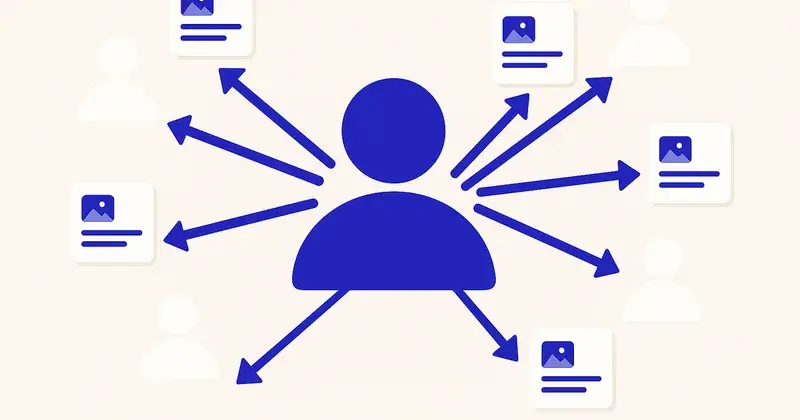
Customer-led growth is not a values statement. It is a specific GTM motion where existing customers — through their actions, not their survey responses — become the primary channel that produces new revenue. CLG is adjacent to product-led growth, but the gravitational pull is different. PLG asks "how does the product convert a free user into a paid one?" CLG asks "how do paid users produce more paid users?" Those are different questions. They get answered with different surfaces, different metrics, and different team rituals.
Here is the thesis I will defend in this post: most teams writing about CLG are confusing it with NPS programs and customer-success metrics. Real CLG means building product surfaces that turn existing customers into your demand-generation channel. Interactive demos are one of the most effective CLG surfaces in B2B SaaS — and that's not a SmartCue pitch, it's a category observation backed by what I see across 4,000+ teams using SmartCue today.
If you've been told CLG is about "putting the customer at the center of everything you do," close that tab. This post is the operator version.
What customer-led growth actually means
The cleanest working definition I've landed on:
Customer-led growth is the GTM motion where existing customers are your primary channel for new revenue — through expansion, advocacy, and product-mediated referral — driven by surfaces inside or adjacent to the product, not by external content or paid acquisition.
Three things in that definition do real work:
- Existing customers as a channel. Not as a satisfaction metric. Not as a renewal probability. As a source of net-new pipeline. If your customers don't generate identifiable opportunities, you don't have CLG; you have customer success.
- Through surfaces inside or adjacent to the product. Not through a referral email blast that marketing sends once a quarter. The mechanism has to be embedded in how customers already use the product.
- Expansion, advocacy, and product-mediated referral. These are the three real CLG levers. Everything else is adjacent.
Category boundaries — where CLG ends
| Category | What it is | What it isn't |
|---|---|---|
| Customer success | Keeping existing customers retained and healthy | A revenue-generation channel by itself |
| Product-led growth (PLG) | The product itself converts free users to paid | Customer-mediated; PLG is product-mediated |
| Advocacy programs | Reference calls, case studies, G2 reviews | Only a slice of CLG; the slice that's most often confused for the whole thing |
| Customer marketing | Marketing to existing customers (newsletters, lifecycle emails) | A push channel; CLG is a pull channel |
| Referral programs | "Refer a friend, get $X" mechanics | One CLG tactic, not the strategy |
| Customer-led growth (CLG) | Customers actively producing pipeline through product-mediated mechanics | Any one of the above on its own |
The conflation that ruins most CLG conversations: people use "CLG" to mean "we run an NPS program and email our promoters quarterly." That's customer marketing with a metric. Real CLG produces a number on the new-pipeline-by-source dashboard.
The CLG mechanics that actually work
Across the SmartCue customer base — 4,000+ teams, 600+ organizations on active subscriptions for over a year — the CLG patterns that produce measurable pipeline are remarkably consistent. Five of them are worth naming.
1. Product-mediated referral loops
The strongest CLG mechanic is also the simplest: a customer uses the product, the product output gets shared with someone outside the customer's organization, and that someone becomes a lead.
The classic example is Calendly. Every meeting invite is a soft demand-gen surface. The recipient sees the brand, the value prop, and a link to start a free account — embedded in the most-clicked link of their week.
For interactive demos, the same loop runs every time a customer shares a SmartCue link with a peer. The shared demo becomes a touchpoint with a buyer who never visited the marketing site. They see the customer's branded walkthrough, click the embedded CTA, and land in a free trial. That is product-mediated referral. No referral program required, no incentive payout, no marketing campaign.
2. Expansion via product-touch
Most B2B SaaS pricing models charge per seat, per workspace, or per usage tier. CLG mechanics for expansion show up when the product surfaces seat-add prompts, workspace invites, or usage-tier upgrades at the moment of customer success.
This is where most teams confuse expansion with CS. Expansion that's driven by a CSM emailing the buyer to upsell is account management, not CLG. Expansion that's triggered by a product surface — a teammate-invite flow, a "share this demo with your team" prompt, a usage-cap notification with a one-click upgrade — is CLG.
3. Customer-shared assets as demand-gen
Interactive demos, dashboards, reports, templates — any artifact a customer produces in your product and then shares with their network — is a CLG surface if the artifact carries the product's brand and a path back to a free account.
This is the one I see most underrated. A SmartCue customer building a sales-enablement demo for their own team is also building a brand asset for SmartCue. When that demo gets shared with a partner, a prospect, or a peer in the same buyer category, it does the work of a webinar, a case study, and a free-trial CTA combined.
4. Public advocacy with attribution
G2 reviews, public case studies, social posts, conference talks. The mistake teams make: counting these as marketing assets and stopping there. The CLG version: each piece of public advocacy is tagged with an attribution surface (a UTM, a unique URL, a tracked CTA) so the marketing team can see which customer's advocacy produced which leads.
If your CRM doesn't have a "customer attribution" field on opportunity creation, you're not running CLG; you're running content marketing with customer quotes.
5. Community-mediated discovery
Slack groups, Discord servers, professional associations, vertical communities. When existing customers participate in these communities and the product they use comes up organically — without the company's marketing team in the conversation — that is CLG.
This one is hard to instrument. The fix isn't to instrument it harder; it's to enable customers to participate authentically and trust that the discovery happens. The companies that try to micromanage community CLG kill the very dynamic that makes it work.
Interactive demos as a CLG surface
Now the SmartCue connection — and I want to be explicit that this is a category observation, not a sales pitch. The same logic applies to any interactive demo platform. If a different platform fits your workflow better, that's the right call.
Interactive demos are an unusually effective CLG surface in B2B SaaS for four reasons:
They are inherently shareable. A demo is a single URL. A customer sends it to a peer over Slack, embeds it in an internal wiki, drops it in a community thread, attaches it to a sales follow-up email. Every share is a CLG event.
They carry the brand. Every shared demo includes the host platform's branding (yours), the lead-capture gate (yours), and the CTA back to a free trial (yours). The customer is doing demand-gen work for you, in their own voice, to an audience that trusts them.

They produce attributable leads. Unlike a slide deck or a Loom video, an interactive demo can capture viewer email addresses, sync them to HubSpot, and route them into the CRM with full attribution to the customer who shared the demo. The CLG attribution problem largely solves itself.
They scale across the customer's own buyer journey. A customer's salesperson sharing a demo with a prospect is a CLG event. A customer's CSM sharing a demo with their customer's procurement team is a CLG event. A customer's marketer embedding a demo on their own website is a CLG event. Each of those is a different surface; the underlying mechanic is the same.
This is why I care about the category. SmartCue is one platform in it; the surface matters more than the vendor.
What this looks like in practice — named customers
I see these mechanics play out directly across the SmartCue customer base. A few patterns worth naming:
Personify Health — the global digital health platform formerly known as Virgin Pulse, around 3,000 employees — runs 800+ interactive demos with well over 100,000 viewer interactions. Their PMM team builds demos for HR-buyer audiences, broker audiences, and internal enablement. The interesting CLG mechanic: their existing customers (HR teams already running Personify Health) share demos of new modules with their internal stakeholders during expansion conversations. That's product-mediated expansion via demo, run by the customer's own internal champion.
Creditsafe — the global credit-data company with 1,500+ employees across the UK, Italy, France, Germany, Netherlands, and Belgium — runs 1,000+ demos with 30,000+ viewer interactions. Their pattern: customers in one region share demos with peer organizations in adjacent regions, generating cross-border referral activity that the central marketing team didn't originate. Pure CLG.
OneDigital — US benefits services, around 3,000 employees — runs 250+ active demos. Their CLG mechanic is sales-led but customer-mediated: AEs share demos in cold-email outreach, and the recipients who become customers then re-share those same demos with their internal teams during evaluation. The forward-share is the CLG event.
League, Quisitive, Dario Health — variants of the same patterns at different scales.
The common signal: all of these teams have customers who share their interactive demos with people the marketing team has never spoken to. That sharing produces leads that show up in HubSpot tagged to the original customer. That is CLG with attribution. Not a feedback loop; not an NPS score; a measurable pipeline channel.

Common CLG anti-patterns
Five ways teams say "we're doing CLG" and aren't.
Anti-pattern 1: NPS theater. You run quarterly NPS surveys, segment promoters and detractors, and call it CLG. NPS is a satisfaction signal. It is not a channel. If your NPS program doesn't produce identifiable opportunities, it's customer success measurement, not CLG.
Anti-pattern 2: Reference-call factories. Marketing keeps a list of customers willing to take reference calls. Sales books references during deal cycles. The references close deals. That's sales enablement with customer participation — useful, but it's a closing tactic, not a CLG channel. Real CLG produces top-of-funnel pipeline, not just bottom-of-funnel proof.
Anti-pattern 3: Case-study mills. You publish customer case studies on your website and count them as CLG. Case studies are content. They become CLG only when each one carries unique attribution and produces measurable inbound from buyers who didn't already know about you.
Anti-pattern 4: Customer-marketing-as-CLG. Newsletters to customers, lifecycle emails, in-app announcements about new features. These are push surfaces operated by the marketing team. CLG is a pull dynamic operated by the customer. If the marketing team is the actor, it's customer marketing.
Anti-pattern 5: Treating advocacy programs as the whole strategy. Advocacy programs (reviews, references, case studies) are one slice of CLG — usually the slice that produces the smallest pipeline. The bigger slices (product-mediated referral, expansion via product-touch, customer-shared assets) are often invisible to the team running the "CLG program" because they don't fit the program's measurement framework.
If your team's CLG dashboard only tracks NPS, advocacy participation, and reference-call counts, you're measuring the wrong slice. Fix that first.
How to actually build a CLG motion
A four-step sequence I'd recommend if you're starting from scratch:
Step 1: Define the CLG metric. One number. Something like "new opportunities created per month with a customer-attribution tag." Without this, you'll measure activity instead of outcomes.
Step 2: Pick one surface. Don't try to run all five mechanics at once. Pick the one most natural to your product. For most B2B SaaS, that's either product-mediated referral (if you have a sharing surface) or customer-shared assets (if you produce artifacts customers send around).
Step 3: Instrument attribution. Every CLG event has to land in the CRM with the originating customer attached. HubSpot is what we integrate with at SmartCue — one CRM, done well, beats five integrated badly. Whatever your CRM is, the attribution field is non-negotiable.
Step 4: Review monthly with the right cross-functional set. Product, marketing, customer success, sales — all four owners of different parts of the CLG flow. The review is "which mechanic produced the most pipeline this month, and which one is stalled." Adjust from there.
The fifth step that almost no one does: kill the CLG mechanics that don't produce measurable pipeline. NPS theater is a sunk cost; if it's not generating opportunities, the team running it should be redirected to a mechanic that does. Most teams won't make this call. The teams that do compound faster.
Where this leaves you
If you finish this post with one takeaway, let it be this: customer-led growth is real, but it is not the thing most articles about it describe. CLG is a measurable GTM motion where existing customers produce new pipeline through product-mediated surfaces. Interactive demos are one of those surfaces; they're not the only one. Pick the surface that fits your product, instrument attribution, kill the theater, and review monthly.
For the SmartCue version of this — the platform that turns customer-shared demos into a measurable CLG channel — see What Is SmartCue? for the product overview, or the demo automation playbook for the operational rollout. If you're comparing platforms, the alternatives roundup is the side-by-side.
Frequently asked about customer-led growth
What is customer-led growth?
A GTM motion where existing customers are the primary channel for new revenue — through expansion, advocacy, and product-mediated referral — driven by surfaces inside or adjacent to the product. CLG is measurable in pipeline terms, not just satisfaction terms.
How is customer-led growth different from product-led growth?
PLG asks how the product converts a free user into a paid one. CLG asks how paid users produce more paid users. Same product, different mechanics; PLG is conversion-focused, CLG is referral-and-expansion-focused. Most successful B2B SaaS companies eventually run both.
Is customer-led growth the same as customer success?
No. Customer success retains existing revenue. CLG generates new revenue from existing customers. The two functions overlap (a healthy customer is more likely to refer), but the metrics are different — retention vs. new-pipeline-by-source.
What's the most underrated CLG mechanic?
Customer-shared product assets. A customer building something inside your product and sharing it with their network is doing demand-gen work for you. Most teams undervalue this because it's hard to instrument; once you instrument it, the pipeline contribution is usually larger than reference programs.
Do interactive demos count as a CLG surface?
Yes — and they're one of the strongest. Every shared demo is a branded touchpoint with a buyer the marketing team didn't reach. With the right attribution, every shared demo can be tagged back to the originating customer, making the CLG contribution measurable.
How do I measure CLG?
Pick one number — typically "new opportunities per month with a customer-attribution tag." Build the attribution into your CRM (HubSpot is what we integrate with at SmartCue). Review monthly. Add secondary metrics (expansion ARR from product-touch surfaces, advocacy-attributable revenue) once the primary metric is stable.
Does CLG only work for PLG companies?
No. Sales-led companies run CLG too — through reference programs, customer-shared sales collateral, and account-based expansion mechanics. The surfaces look different but the underlying motion (existing customers producing new revenue) is the same.
What's a realistic timeline to see CLG results?
For interactive-demo-driven CLG specifically, the first attributable opportunity usually shows up within 60-90 days of instrumenting attribution. For NPS- or advocacy-driven CLG, the timeline is longer — usually two quarters before the program produces measurable pipeline. If you're a year in and the dashboard still shows zero attributable revenue, the mechanic isn't working.
Related reading
- What Is SmartCue? — the platform that powers customer-shared demos as a CLG surface
- What Is Demo Automation? — the workflow architecture behind the demo surface
- Demo Automation Playbook — the 90-day rollout
- SmartCue alternatives compared — side-by-side platform comparison
- SmartCue pricing — plans start at $99/user/year
Build the surface that makes your customers your demand-gen channel — start a free SmartCue account in 6 minutes at app.getsmartcue.com, or see pricing →.